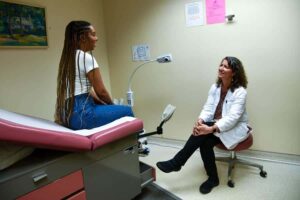
 Most women in their 20s and 30s are very busy, whether with a career, a family, a home, pets, or all of these things at once! It’s easy to forget recommended health screenings when you are both busy and relatively healthy. However, health screenings do more than fix health problems. A typical screening for a woman in her 20s and 30s may include
- a check for hidden medical issues,
- vaccine update,
- a check for future medical problems for which she is at risk,
- encouragement in making healthy lifestyle choices.
In addition, regular health screenings create a relationship between patient and doctor, which may be useful in future medical emergencies.
Specific things women in their 20s and 30s should have health screenings for:
- Cholesterol. Women with normal cholesterol levels only need to repeat this screening every 5 years. Women with conditions like diabetes and kidney problems may need this screening more often.
- Blood pressure. Get this checked every 3 to 5 years. However, if the top number is between 120-139 or the bottom number is between 80-89, then get your blood pressure checked once a year. If the top number is higher than 140 or the bottom number is higher than 90, see a doctor.
- Diabetes. Often, if you have a higher blood pressure reading, you will then also get your blood sugar levels tested for diabetes.
- Immunizations. This is a good time to get your immunizations updated, such as tetanus, flu shot, and varicella vaccine.
- Pelvic exam and pap smear. Women in their 20s and 30s should have a pelvic exam and pap smear at least every 3 years to check for cervical cancer.
- Breast exam. Although mammograms are not normally recommended for women under 40, your doctor may do a clinical breast exam to check for breast cancer.
- Eye exam. Women with vision problems should have an eye exam at least every 2 years.
- Dental exam. Go to the dentist for a dental exam once or twice a year.
- Physical exam. Women will get weighed, have their height measured, and have their BMI checked. This will likely occur in conjunction with one of the other health screenings.
- Other issues, such as depression, alcohol and tobacco use, and diet and exercise, may be covered during a typical health screening.
Women in this age group should not forget to schedule health screenings! Even if they are feeling well, a simple routine test may uncover a hidden medical issue. Catching problems early is much better than waiting until the problem is worse.